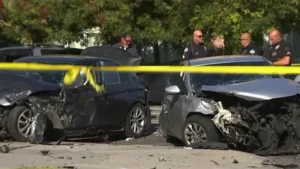
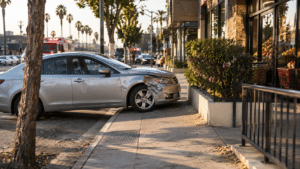
On the afternoon of November 7, 2026, ten people were standing or walking on a sidewalk outside the Superior Grocers near Washington Boulevard and 10th Avenue in the Arlington Heights neighborhood of Los Angeles when a silver Honda jumped the curb and plowed into the group. Eight people, ranging in age from 3 to 60, were taken to the hospital. According to NBC Los Angeles, two patients were briefly pinned before bystanders freed them, and a man who pulled his injured father from the scene described him as stable in the emergency room. ABC7 reported that the injured included a toddler. The 60-year-old driver was arrested and charged with misdemeanor reckless driving causing injury; police do not believe drugs or alcohol played a role, and the driver told officers he believed his brakes had failed.
No one died, and officials say the injuries are not life-threatening. But the crash is a near-perfect case study in the kinds of legal questions that come up any time a vehicle leaves the roadway and hurts people who did everything right people who were simply walking down a sidewalk. If this had happened to you or someone you love, here is what California law says about your rights, your deadlines, and who might be on the hook.
“My Brakes Failed” Is Not an Automatic Defense
A sudden, unforeseeable mechanical failure can, in rare cases, reduce a driver’s legal responsibility under what courts call the sudden emergency doctrine. But that defense only protects a driver whose brakes failed through no fault of their own and who reacted reasonably once the emergency began. It does not protect a driver who ignored a dashboard warning light, skipped routine maintenance, or knew the brakes felt soft weeks earlier.
In practice, that means a driver’s claim of “my brakes failed” is the start of an investigation, not the end of one. An attorney representing injured pedestrians will typically want to see the vehicle’s maintenance records, any prior repair invoices, and, where possible, an inspection of the brake system itself before the car is repaired, sold, or scrapped. California is a fault-based state, so proving the driver was negligent whether in how the car was maintained or in how it was driven is central to any civil claim, regardless of what the misdemeanor criminal case decides.
For a free legal consultation call (310) 424-7858
You May Have More Than One Potential Defendant
A crash like this one often involves more than just the driver. Depending on what the brake inspection and vehicle history show, injured victims may have claims against:
- The driver, for negligent operation of the vehicle or for driving a vehicle known to have maintenance problems.
- A mechanic or repair shop, if the brakes were serviced recently and the work was done improperly.
- The vehicle manufacturer or a parts maker, under California product liability law, if a defective part caused the failure rather than a maintenance issue.
- The property owner, in some sidewalk-strike cases, if the storefront lacked reasonable safeguards such as bollards or curb barriers in a location where vehicle-into-pedestrian incidents were foreseeable. Many California cities now require or encourage protective bollards outside ground-floor retail precisely because of incidents like this one.
Sorting out which of these theories applies takes investigation most injured people can’t do from a hospital bed, which is one reason it helps to get an attorney involved early, before vehicles are released from police impound or repaired.
California’s Comparative Negligence Rule Protects Injured Pedestrians
California follows a pure comparative negligence rule. Even if an injured person is found partly at fault for their own injuries, they can still recover damages reduced by their percentage of fault. A pedestrian standing on a sidewalk outside a grocery store, as in this case, is very unlikely to be assigned any fault at all, but the rule matters in the many personal injury cases where a defendant tries to shift blame onto the victim. It’s a meaningfully more favorable rule for plaintiffs than the contributory negligence standard still used in a handful of other states.
Click to contact us today
When There’s More Than One Defendant, Proposition 51 Changes the Math
If an investigation turns up two or more at-fault parties say, a driver and a negligent repair shop California’s Proposition 51 becomes relevant. Under Prop 51, each defendant is held jointly and severally liable for a victim’s economic damages (medical bills, lost wages) but only severally liable, in proportion to their own share of fault, for non-economic damages like pain and suffering. In plain terms: the driver can’t be forced to personally cover a mechanic’s share of the pain-and-suffering damages. This is one of the technical reasons that properly identifying every responsible party, and their percentage of fault, matters so much in a multi-victim crash.
Complete a Free Case Evaluation form now
The Clock Is Ticking: California’s Statute of Limitations
Under California Code of Civil Procedure section 335.1, a person injured by another’s negligence generally has two years from the date of the injury to file a civil lawsuit. Miss that window, in most circumstances, and the right to sue is gone for good, no matter how strong the underlying claim.
There’s an important wrinkle for the youngest victims in a crash like this one. Under CCP section 352, the statute of limitations is tolled paused for a minor until that child turns 18. A 3-year-old injured in this crash would, absent other complications, have until roughly their 20th birthday to bring a claim in their own right, though a parent can also act sooner on the child’s behalf. That tolling rule is one of the more commonly misunderstood parts of California injury law, and it’s worth confirming with an attorney rather than assuming a standard two-year deadline applies to every victim.
What To Do If You or a Loved One Was Hurt in a Similar Crash
- Get evaluated by a doctor immediately, even if you feel fine adrenaline and shock can mask serious injuries like internal bleeding or concussions for hours or days.
- Don’t give a recorded statement to an insurance adjuster before speaking with an attorney; early statements are often used later to minimize a claim.
- Try to preserve evidence, including photos of the scene, the vehicle, and any visible skid or scrape marks on the curb or sidewalk, before conditions change.
- Keep records of every medical visit, missed workday, and out-of-pocket expense connected to the injury.
- Don’t sign a settlement release from any insurance company until you understand the full scope of your injuries and future treatment needs.
Pedestrian Crashes Are Not Rare
Incidents like the Arlington Heights crash are part of a much larger national pattern. According to NHTSA, 7,080 pedestrians were killed in traffic crashes nationwide in 2024, and more than 71,000 were injured on average, a pedestrian died in a traffic crash somewhere in the country roughly every 74 minutes. Most of those crashes, like this one, happen in places pedestrians have every reason to feel safe: sidewalks, crosswalks, and parking lots outside the stores they’re walking into.
Talk to Zade-Law, APC
If you or a family member was injured by a vehicle in California whether on a sidewalk, in a crosswalk, or anywhere else you don’t have to sort out liability, insurance, and deadlines on your own. Zade-Law, APC offers free consultations to help injured Californians understand their options and their rights. Reach out to our team to talk through what happened and what comes next.
Call or text (310) 424-7858 or complete a Free Case Evaluation form