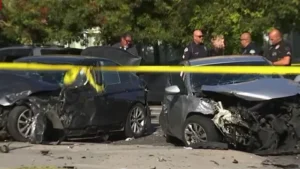
Hit-and-run crashes leave victims with more than just physical injuries they leave unanswered questions about who will pay for medical bills, lost wages, and pain and suffering when the at-fault driver tries to disappear. A recent case out of Desert Hot Springs shows both how far some drivers will go to avoid accountability, and how victims can still pursue compensation even when a driver flees the scene.
What Happened?
According to KESQ News Channel 3, a Desert Hot Springs man was arrested on July 24, 2026, and accused of critically injuring a pedestrian in a hit-and-run crash. Police used Flock Safety Automated License Plate Reader (ALPR) cameras to quickly identify the suspect vehicle and develop investigative leads.
As the investigation progressed, detectives learned the suspect had purchased bus and train tickets in what investigators described as an apparent attempt to leave the area and avoid arrest. The 53-year-old suspect was arrested in Palm Springs just hours before he was scheduled to leave the state, and was booked into Riverside County Jail on $500,000 bail, facing a felony hit-and-run charge involving serious injury.
The victim’s caretaker told News Channel 3 that the victim remains hospitalized and continues to receive medical treatment, and said the victim’s apartment has been targeted by break-ins while they’ve been away.
Call our personal injury lawyers today
For a free legal consultation call (310) 424-7858
What Are My Legal Options After a Hit-and-Run?
When a driver flees the scene, victims often assume they’re out of luck. In reality, there are several paths to compensation, even before or regardless of whether the at-fault driver is caught.
Uninsured Motorist (UM) Coverage
Most California auto insurance policies include uninsured motorist coverage, which can apply to hit-and-run accidents because an unidentified driver is treated similarly to an uninsured one. If you carry UM coverage, you may be able to file a claim with your own insurer for medical expenses, lost wages, and pain and suffering, even if the at-fault driver was never found.
The Criminal Case vs. the Civil Case
A criminal prosecution, like the felony hit-and-run charge in this case, is separate from a victim’s right to pursue a personal injury claim. A criminal conviction can result in fines or jail time for the driver, but it does not automatically compensate the victim. A civil claim is the path toward recovering medical bills, lost income, and other damages, and evidence from the criminal case, including license plate reader data and police reports, can often strengthen it.
California’s Hit-and-Run Laws
Under California Vehicle Code Section 20001, a driver involved in a crash resulting in injury or death must stop and provide identifying information and assistance. Failing to do so, as alleged here, can be charged as a felony when the crash causes serious injury or death, and a conviction can also carry significant weight in a related civil case.
Why Do I Need a Personal Injury Attorney?
Hit-and-run cases often involve extra layers of investigation and insurance complexity. An attorney can help by:
Coordinating With Law Enforcement
An attorney can request police reports, ALPR data, and other evidence gathered during the criminal investigation to help build the civil case.
Navigating Uninsured Motorist Claims
Filing a UM claim with your own insurer isn’t always straightforward. Insurance companies may still dispute the claim or undervalue it, and an attorney can push back and negotiate for full compensation.
Calculating the Full Value of Your Claim
An attorney can help account for both economic damages, like medical bills and lost income, and non-economic damages, like pain and suffering.
Protecting Victims Who Can’t Advocate for Themselves
In cases where a victim is hospitalized or incapacitated, as reported in this case, a family member or caretaker often has to manage practical and legal matters on the victim’s behalf. An attorney can help take some of that burden off the family while the victim focuses on recovery.
Click to contact us today
FAQ
Can I still get compensation if the driver who hit me fled the scene?
Often, yes. If you carry uninsured motorist coverage, you may be able to file a claim with your own insurance company for a hit-and-run accident.
Does the criminal case against the driver help my injury claim?
It can. Evidence gathered in the criminal investigation, such as license plate data or a police report, can support a related civil claim, though the two cases are handled separately.
What if the driver is never caught?
Uninsured motorist coverage is designed to apply in situations where the at-fault driver can’t be identified, so victims aren’t left without options.
How long do I have to file a claim after a hit-and-run?
California’s personal injury statute of limitations is generally two years from the date of the crash, though insurance policies may have their own notice requirements, so it’s best to act promptly.
Do I need a lawyer if my case involves uninsured motorist coverage?
It isn’t required, but insurers can dispute or undervalue UM claims just as they might any other claim, so having an attorney advocate on your behalf can help.
Complete a Free Case Evaluation form now
Injured in a Hit-and-Run? We’re Here to Help
Being hit by a driver who flees the scene can feel like a dead end, but victims often still have real options for compensation. Our personal injury attorneys work on a contingency basis, meaning you pay nothing unless we recover compensation for you. Contact us today for a free consultation.
Call or text (310) 424-7858 or complete a Free Case Evaluation form