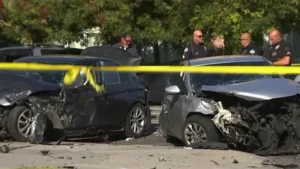
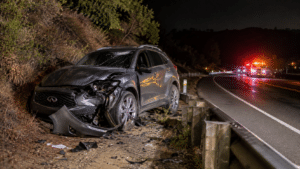
Just after 10 p.m. on Friday, November 13, 2026, California Highway Patrol officers responded to a devastating single-vehicle crash on westbound State Route 24, just east of Camino Pablo in Orinda. A gray Infiniti SUV carrying four young people all between the ages of 16 and 20 left the roadway. Two passengers, 18-year-old Serena Denise Broom and 20-year-old Sariyah Unique Pintily, both of San Francisco, were pronounced dead at the scene, according to ABC7 News. The 19-year-old driver suffered moderate injuries after being ejected from the vehicle, and a 16-year-old passenger was hospitalized in critical condition, KTVU reported.
As of this writing, CHP says the cause of the crash remains under investigation, and officials have stated that drugs or alcohol do not appear to have been a factor. What is already on the record is that the driver and Pintily were not wearing seatbelts, and the driver was thrown from the vehicle.
Tragedies like this raise hard, immediate legal questions for the families involved and for anyone who has ever been a passenger in a friend’s or family member’s car. Here’s what California law says.
You Can Be a Passenger and Still Have a Claim
A common misconception is that if you were “just a passenger,” there’s no one to hold accountable, or that your own choices (like not wearing a seatbelt) automatically wipe out any claim. Neither is true under California law.
- A negligent driver is legally responsible to their passengers, not just to other drivers. If a driver’s inattention, speed, fatigue, or a mechanical issue they should have addressed caused the vehicle to leave the road, injured or surviving passengers (or, in a fatal crash, their surviving family) can generally bring a claim against that driver.
- Not wearing a seatbelt does not automatically bar recovery. California follows a pure comparative negligence rule. Even if a passenger’s own conduct, like forgoing a seatbelt, contributed to the severity of their injuries, their compensation is reduced by their share of fault it isn’t eliminated. A jury or insurer may argue that unbelted injuries should be discounted, but that is a factual dispute to be litigated, not an automatic bar.
- The vehicle owner can sometimes be liable too. Under California Vehicle Code section 17150, the owner of a vehicle can be held liable for a permissive driver’s negligence, up to statutory limits, separate from the driver’s own liability. If the SUV wasn’t registered to the teen driver, this matters.
For a free legal consultation call (310) 424-7858
When a Single-Vehicle Crash Isn’t as “Simple” as It Looks
Single-vehicle crashes are often assumed to be open-and-shut “no one else was involved, so there’s nothing to pursue.” These cases frequently raise questions that aren’t answered by a preliminary CHP report:
- Was there a road defect, debris, poor signage, or a design issue that a government entity is responsible for maintaining?
- Did a tire, steering, or braking failure point to a manufacturing or maintenance defect?
- Was the vehicle speeding, or did road or weather conditions play an unreported role?
- Was the driver fatigued, distracted by a phone, or otherwise negligent in a way that doesn’t show up in a toxicology report?
A police report that says a cause is “still under investigation” is a starting point, not the final word. Evidence like vehicle data recorder (“black box”) information, cell phone records, and the physical scene itself can degrade or become harder to obtain the longer an independent investigation is delayed.
If a Government Entity Might Be Involved, the Clock Moves Faster
If the investigation ultimately points to a roadway defect, a missing guardrail, inadequate lighting, or another hazard that a public entity (like Caltrans or a county) was responsible for maintaining, there’s a critical deadline that catches people off guard: the California Government Claims Act requires a formal claim to be filed with the public entity within six months of the incident far sooner than the standard deadline below. Missing it can permanently forfeit the right to pursue that defendant, even while other claims stay open.
Click to contact us today
The Standard Deadline: California’s Two-Year Statute of Limitations
For most personal injury and wrongful death claims in California, California Code of Civil Procedure section 335.1 sets a two-year deadline from the date of the injury or death to file a lawsuit. Two years can feel distant in the immediate aftermath of a tragedy, but evidence doesn’t wait, and insurers are already building their file from day one.
Complete a Free Case Evaluation form now
Wrongful Death Claims: Who Can Bring Them
When a crash is fatal, California law (Code of Civil Procedure section 377.60) allows specific surviving family members typically a spouse, domestic partner, or children, and in some circumstances parents or other dependents to bring a wrongful death claim. This is separate from any claim the estate itself may pursue for the decedent’s own pre-death pain and suffering, medical expenses, and related losses. Figuring out who is entitled to bring which claim, and how damages are allocated among family members, is one of the more legally technical parts of these cases.
What Families Should Do Right Now
If you’re a surviving passenger, or you’ve lost a loved one in a crash like this one:
- Don’t give a recorded statement to any insurance company including the at-fault driver’s own insurer before understanding how it could be used.
- Preserve what you can. Photos, text messages about the trip, and the names of anyone who saw the vehicle before the crash can all matter later.
- Don’t assume a “no other vehicle involved” crash has no other liable party. Road conditions, vehicle defects, and the driver’s own conduct are all still open questions until an independent investigation says otherwise.
- Watch the calendar from day one, especially if any public roadway or government entity could be involved.
Talk to Zade-Law, APC
Losing someone in a crash like the one on Highway 24, or surviving one with life-altering injuries, upends a family’s life in an instant. You shouldn’t have to also become an expert in comparative negligence, government claims deadlines, and insurance tactics while you’re grieving or recovering. Zade-Law, APC offers free consultations for Californians navigating exactly this kind of loss. Contact our office to talk through what happened and understand the options available to you and your family.
Sources
2 women killed, 2 injured in crash on Highway 24 near Camino Pablo in Orinda, California Highway Patrol says — ABC7 News (KGO-TV), published November 15, 2026, updated November 16, 2026
Authorities identify 2 women killed in Orinda car crash — KTVU FOX 2, published November 16, 2026
Attorney Advertising Disclaimer
This blog post is for general informational purposes only and does not constitute legal advice. Reading this post does not create an attorney-client relationship with Zade-Law, APC. The facts of the Highway 24 crash described above are based on public news reporting as of the date of publication and may change as the investigation continues. Every case is different, and past results do not guarantee similar outcomes. If you need legal advice about a specific situation, please contact Zade-Law, APC directly for a consultation.
Call or text (310) 424-7858 or complete a Free Case Evaluation form